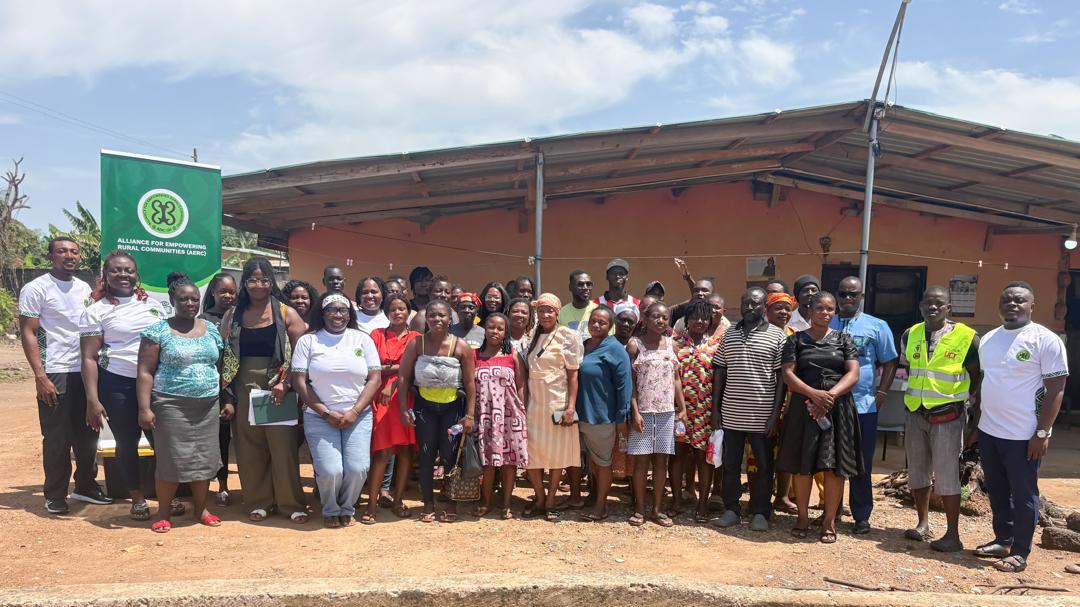
Goshen/Gbetsile, Kpone Katamanso Municipality — Alliance for Empowering Rural Communities (AERC) commemorated World Environment Day 2026 with a community dialogue aimed at strengthening local action on environmental protection, sanitation and climate resilience in the Gbetsile community.
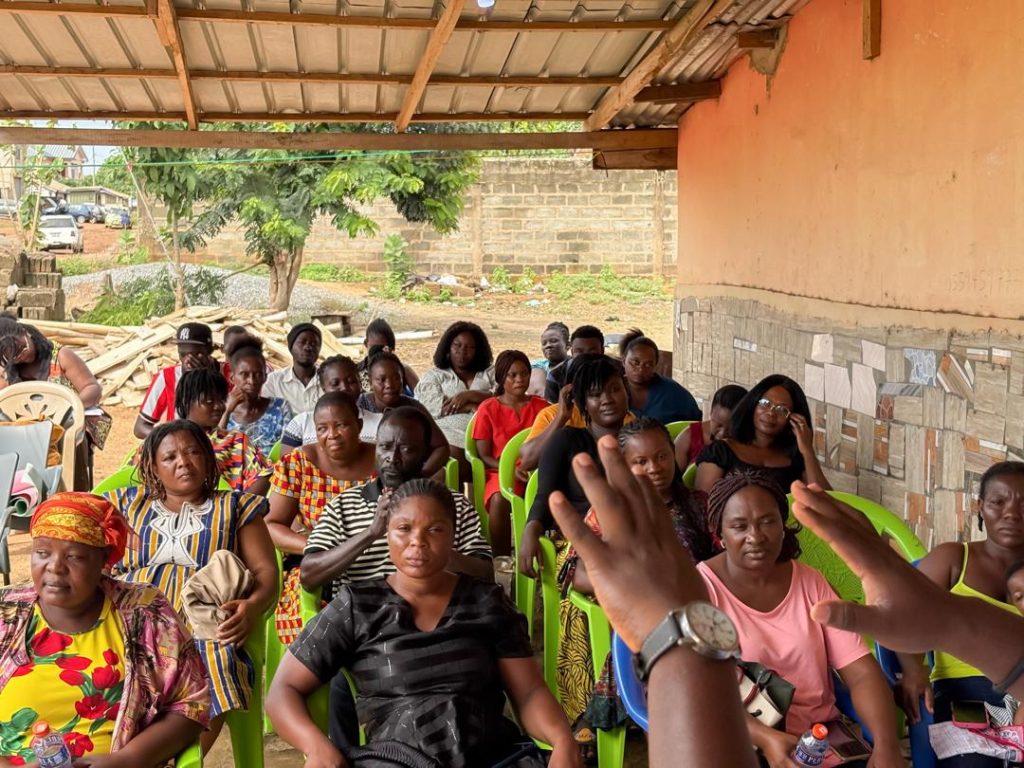
The event, held on Friday, 5 June 2026, brought together participants, including community members, women, youth, local leaders, assembly representatives, volunteers and AERC staff. The dialogue created a platform for residents to identify pressing environmental challenges affecting the community and propose practical solutions to address them.
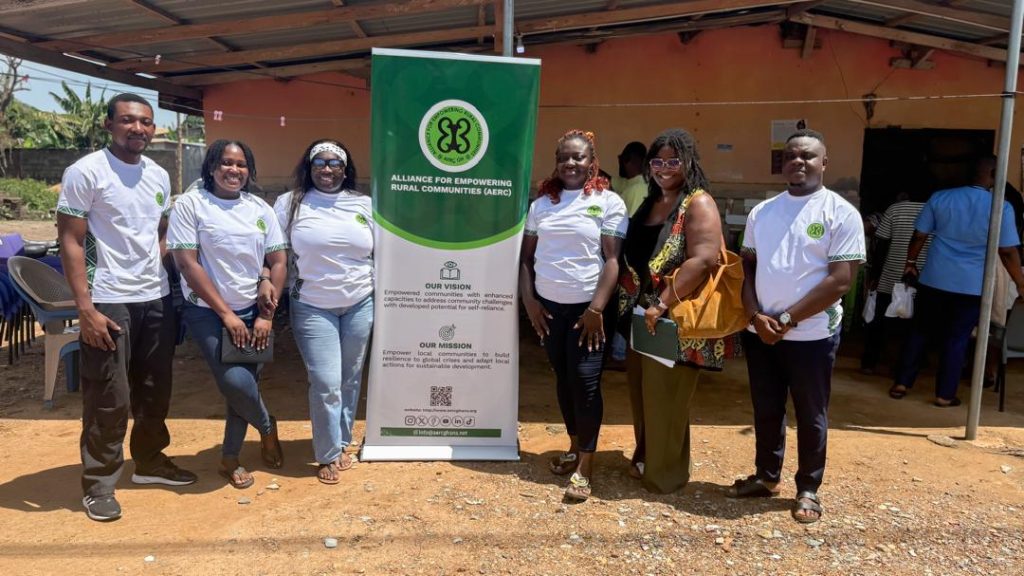
The engagement formed part of AERC’s commitment to promoting community-led environmental action and empowering local residents to take ownership of issues that affect their health, livelihoods and environment.
Waste Management and Sanitation Emerge as Key Concerns
During the dialogue, participants identified several environmental and community challenges, including poor waste management, indiscriminate dumping, open burning of waste, inadequate drainage systems, flooding, erosion, poor road conditions, water supply challenges, limited sanitation facilities and inadequate street lighting.
Waste disposal and poor sanitation emerged as some of the most pressing concerns. Community members explained that irregular waste collection, inadequate access to waste bins and limited disposal options contribute to indiscriminate dumping and the blockage of drains.
Participants noted that these practices do not only affect the cleanliness of the community but also contribute to flooding and create health and environmental risks for residents.
The discussion also highlighted the importance of stronger cooperation among community members, the Municipal Assembly, waste-management service providers and other relevant stakeholders. Participants acknowledged that although improved infrastructure and waste services are necessary, long-term environmental improvement also requires behaviour change, sustained public education and active community participation.
Connecting Community Action to the Youth Zero Waste Initiative
The dialogue also reinforced AERC’s ongoing Youth Zero Waste initiative in Kpone Katamanso, which promotes practical community composting, improved waste separation and greater participation of young people and informal waste workers in local waste management.
Through the initiative, AERC is demonstrating how organic waste that would otherwise be dumped or burned can be separated and converted into useful compost. The project also seeks to equip young people and informal waste workers with practical skills in composting, safe waste handling and community environmental action.
Participants discussed the potential of community composting as a practical response to the large amount of biodegradable waste generated by households, food vendors and other community sources. This provided an opportunity to connect the community’s concerns about poor waste disposal with a practical solution already being promoted through the Youth Zero Waste project.
The engagement also highlighted the important role that informal waste workers play in the local waste system and the need for their knowledge, safety and participation to be considered in community and municipal waste-management efforts.
Practical Solutions Identified by the Community
As part of the dialogue, participants examined the causes and effects of the environmental challenges identified and proposed practical actions that could be taken by residents and local stakeholders.
The community agreed on the need for regular clean-up exercises and sustained environmental education and sensitisation. Other proposed interventions included improved waste separation, climate advocacy, community composting and the strengthening of community structures that support sanitation and collective environmental action.
Particular attention was given to community composting, improved waste separation and continuous environmental education as practical approaches to reducing the volume of organic waste entering dumpsites and drains.
These recommendations strongly complement AERC’s Youth Zero Waste work, which seeks to demonstrate that communities can move beyond simply disposing of organic waste and instead treat it as a resource that can be converted into compost for gardening and agricultural use.
Strengthening Youth and Community Ownership
The dialogue demonstrated the value of creating spaces where residents can participate directly in identifying environmental problems and shaping solutions.
For AERC, youth participation remains particularly important. Young people have the potential to play a stronger role in community sensitisation, composting, waste separation and advocacy for improved environmental management.
By connecting youth leadership with the practical experiences of informal waste workers, residents and local authorities, AERC aims to support a more inclusive approach to zero waste in which communities are not simply beneficiaries of environmental programmes but active participants in designing and implementing solutions.
From Dialogue to Action
The World Environment Day engagement increased community awareness of local environmental challenges and strengthened interest in collective action.
Key recommendations emerging from the discussions included improving waste collection services, increasing access to waste bins, strengthening drainage infrastructure, sustaining environmental education and improving collaboration among community members, the Municipal Assembly and waste-management actors.
For AERC, one of the important outcomes of the dialogue was the opportunity to connect community concerns around waste with the practical composting activities being implemented through the Youth Zero Waste initiative.
The project is helping demonstrate that locally generated organic waste can be processed into a useful resource. Some of the compost produced through AERC’s work has already been provided to local farmers for gardening, and feedback received from the farmers indicates that the compost has been useful for their activities.
This experience is encouraging AERC to continue developing the initiative and explore opportunities to establish a more permanent community composting site that can support larger-scale organic waste recovery, practical training, environmental education and farmer access to compost.
Building a Cleaner and More Resilient Kpone Katamanso
AERC believes meaningful environmental action becomes more sustainable when communities are informed, included and empowered to participate in decision-making.
The Gbetsile dialogue demonstrated that residents are willing to contribute to environmental improvement when they are given the opportunity to identify their own challenges and participate in developing solutions.
The World Environment Day Community Dialogue concluded with a shared commitment to move beyond discussion toward practical action. Participants expressed their willingness to support initiatives that contribute to a cleaner, healthier and more resilient community.
For AERC, the engagement represents another step toward strengthening community participation, advancing youth-led zero-waste solutions and building stronger partnerships for sustainable waste management in the Kpone Katamanso Municipality.
