Every day in Ghana, we see small moments that remind us why the energy transition matters. It could be a child studying with a flickering light during a power cut or a neighbor cooking over charcoal because there is no affordable alternative. These simple scenes tell a bigger story about energy, innovation, and the kind of future we want to build.
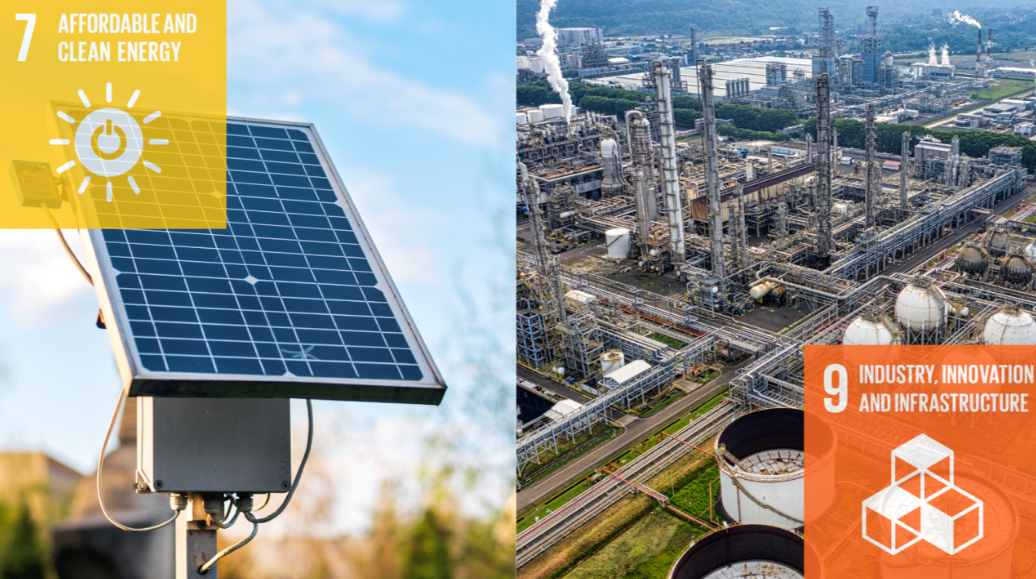
SDG 7 calls for access to affordable and clean energy for all. But the reality is that about 77% of Ghanaian households still rely on firewood and charcoal for cooking (Institute of Statistical, Social and Economic Research [ISSER], 2024). This affects health, finances, and the environment. And even though our national electricity access is 86.63%, many rural and peri-urban communities still face unstable supply (World Bank, 2021). Clean, reliable energy is not just a development indicator. It shapes how people live, learn, and work.
SDG 9 focuses on industry, innovation, and resilient infrastructure, which make clean energy possible. Today, non-hydro renewable energy contributes less than 3% to Ghana’s electricity mix (Energy Commission, 2025). Yet Africa’s clean energy transition has the potential to create over 4 million jobs by 2030, especially for young people (International Renewable Energy Agency [IRENA], 2023). This tells us that innovation is not only about technology. It’s also about opportunity.
In my work in renewable energy and advocacy, I have learned that progress happens when people are involved in shaping the solutions. Women who rely on biomass for cooking understand the risks and costs. Young people see the possibilities of new technology. Communities know what works in their context.
If Ghana is going to achieve SDG 7 and SDG 9, we must build systems that are people-centered, reliable, affordable, and designed with local realities in mind.
A people-centered energy system means developing technologies and services that are accessible, easy to use, and address challenges faced by everyday Ghanaians especially in rural and peri-urban areas. Reliability ensures that the energy supply is consistent, reducing disruptions that affect education, business, and health. Affordability is crucial so that all households can feasibly switch to clean energy alternatives without financial strain. Finally, solutions must be adapted to local realities taking into account existing infrastructure, cultural practices, and economic conditions to ensure they are practical and sustainable.
Clean energy and innovation are more than goals. They are investments in dignity, opportunity, and a more resilient future for everyone.
References:
Institute of Statistical, Social and Economic Research. (2024). 2024 Ghana Social Development Outlook. https://www.ghanaweb.com/GhanaHomePage/business/77-of-households-still-rely-on-charcoal-Report-1991380
World Bank. (2021). Access to electricity (% of population) – Ghana. World Bank Open Data. https://data.worldbank.org/indicator/EG.ELC.ACCS.ZS?locations=GH
International Renewable Energy Agency. (2023). Renewable Energy and Jobs Annual Review. https://www.irena.org/publications/2023/May/Renewable-Energy-and-Jobs-Annual-Review-2023
Energy Commission. (2025). 2025 energy outlook for Ghana. https://www.energycom.gov.gh/index.php/planning/sub-codes?download=723%3Aenergy-outlook-for-ghana-2025
