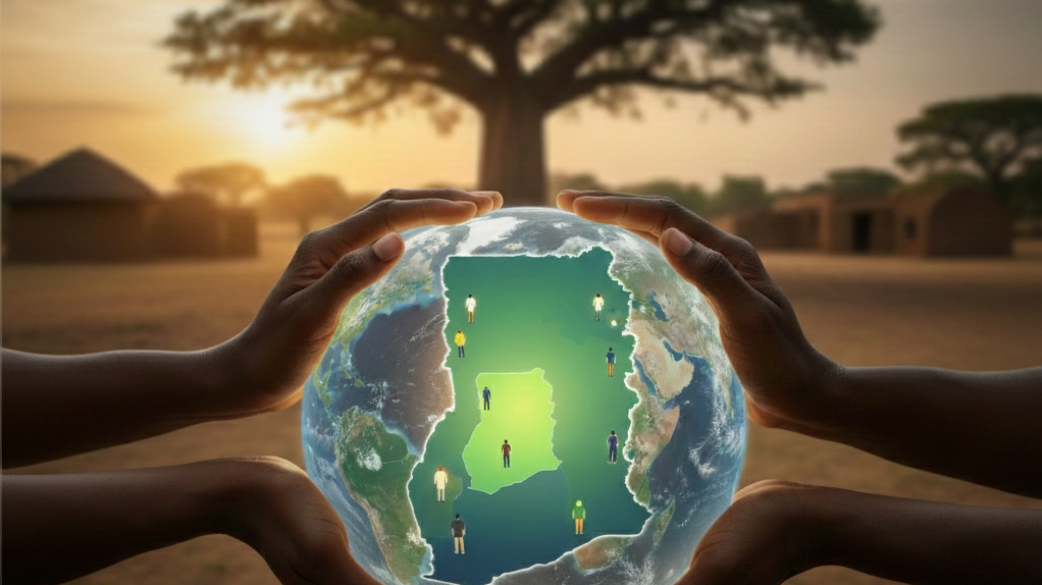
Ghana’s climate crisis is no longer a distant threat, it is a daily reality for millions. From unpredictable rainfall in the north to coastal erosion in the south, frontline communities, including farmers, women, youth, and fisherfolk bear the brunt of climate impacts. These communities possess invaluable, generational knowledge about environmental change and resilient practices. Yet, their voices are often absent from the decisions that shape their lives. For Ghana to build a resilient, equitable, and climate-secure future, local voices must not only be consulted, they must lead. Community-led adaptation is both a rights-based imperative and a scientifically proven, cost-effective, and sustainable approach to climate resilience.
Climate impacts in Ghana are highly localized. Smallholder farmers are often the first to notice soil degradation, shifting rainfall patterns, or increasing pest outbreaks. Women identify early signs of water scarcity and food insecurity, while youth understand how environmental degradation affects their economic prospects. Research consistently shows that adaptation interventions designed with community participation are more context-specific and achieve greater long-term success than top-down approaches. Local knowledge, cultivated through lived experience, enhances scientific data and ensures climate strategies respond to real needs, not assumptions. Despite this, major climate decisions and budgeting processes remain dominated by national actors, with insufficient representation from rural communities.
Smallholder farmers contribute an estimated 60–70% of Ghana’s food, yet they are among the most climate-vulnerable groups due to erratic rainfall, prolonged dry spells, shifting planting seasons, and pest outbreaks. Many farmers already employ highly effective indigenous and climate-smart adaptation strategies, such as intercropping, soil mulching, water harvesting, and organic fertilization. These practices must actively inform national adaptation planning. Greater inclusion of farmers in climate budgeting is essential to expand climate-smart agriculture financing, establish farmer-led early-warning systems, provide accessible weather and climate information, and support community-managed water systems and nature-based solutions. Without farmers’ leadership in policy spaces, Ghana risks implementing solutions that are ineffective on the ground.
Women play critical roles in agriculture, food processing, household water management, and natural resource stewardship. They are often the first responders to climate shocks, securing water, stretching food supplies, and protecting family livelihoods. Despite this, women remain significantly underrepresented in climate decision-making due to structural barriers such as limited land ownership, restrictive norms, and unequal access to credit. Climate policies that fail to incorporate women’s perspectives risk reinforcing existing gender inequalities. A gender-responsive climate agenda must increase women’s representation in local and national climate committees, allocate gender-responsive budgets, support women-led enterprises, and promote equitable access to land, finance, and training. Evidence shows that including women in climate governance improves the success and long-term sustainability of adaptation initiatives.
Young people represent more than half of Ghana’s population and are driving innovations in agritech, renewable energy, climate education, and environmental monitoring. Yet, youth participation in formal climate policy spaces remains limited and often tokenistic. Meaningful inclusion requires granting youth formal seats on climate advisory boards, ensuring budget allocations for youth-led innovation, investing in skills development in climate data and green technologies, and creating opportunities for youth to monitor public climate spending. Empowering Ghana’s youth is not only strategic for immediate action; it is essential for the nation’s long-term resilience.
Ghana has developed robust climate frameworks, including the National Climate Change Policy, National Adaptation Plan, and updated Nationally Determined Contributions (NDCs). However, multiple assessments reveal persistent implementation gaps due to limited community involvement and weak resource flows to local governments. Institutionalizing community-led adaptation strengthens ownership of climate projects, improves accountability and transparency in climate finance, promotes cost-effective and locally appropriate solutions, bridges scientific knowledge with indigenous practices, and enhances the long-term sustainability of interventions. Countries that institutionalize local participation consistently demonstrate better outcomes in both adaptation and climate governance. Ghana cannot afford to treat community participation as optional; it must be the foundation of national adaptation strategies.
A Call to Action
To center frontline communities in Ghana’s climate decisions, the following steps are essential: establish formal, mandatory mechanisms for farmers, women, youth, and community groups to participate actively in all climate policy, budgeting, and monitoring processes; significantly increase climate financing directed toward community-led adaptation initiatives and local governments; ensure climate information services reach vulnerable communities efficiently and in accessible, local formats; and invest substantially in indigenous knowledge systems and proven nature-based solutions.
Frontline communities are not passive recipients of climate aid, they are leaders with solutions rooted in generations of knowledge, resilience, and environmental stewardship. By elevating their voices, Ghana can build a climate-resilient future that is just, inclusive, and grounded in the wisdom of those who know the land best.
References
Yaro, J. A. (2013). The perception of and adaptation to climate variability/change in Ghana by small-scale and commercial farmers. Regional Environmental Change, 13, 1259–1272.http://ugspace.ug.edu.gh/handle
UNDP. (2016). Gender and Climate Change: Overview of Linkages and Priority Actions. United Nations Development Programme. https://www.uncclearn.org/resources/library/overview-of-linkages-between-gender-and-climate-change-
